
Table of Contents
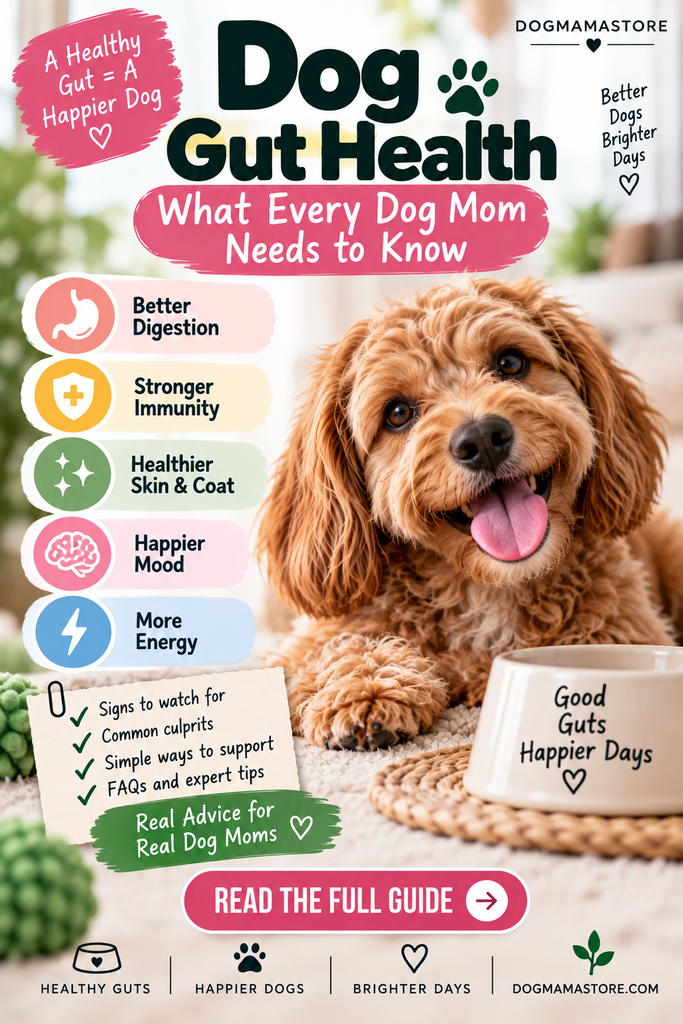
If you’ve ever cleaned up more “surprises” in the backyard than you’d like to admit, we need to talk about dog gut health. It’s one of those things nobody warns you about when you bring home your first puppy, but it ends up affecting almost everything — energy, mood, coat, immunity, even how often your vet visits turn into “so, about that poop.”
Let’s break down what’s actually going on, what happens when things are off, and how you can support your pup without losing your mind (or your carpet).
Why Dog Gut Health Matters More Than You Think
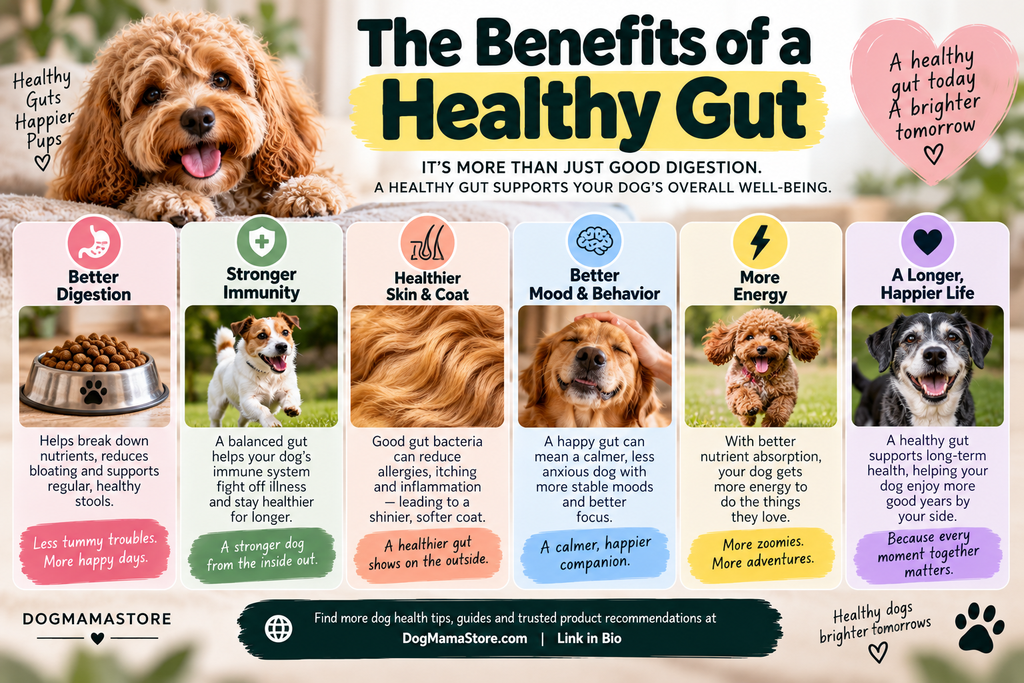
Your dog’s gut isn’t just about digestion. It’s home to trillions of bacteria that influence their immune system, their skin, and even their behavior. When dog gut health is balanced, you’ll usually see a dog with steady energy, firm stools, a shiny coat, and a pretty happy disposition.
When it’s not balanced? That’s when things get messy — literally and figuratively. An imbalanced gut microbiome can show up in ways that seem unrelated to digestion at all, which is exactly why so many dog parents miss it until it becomes a bigger issue.
Signs of Poor Gut Health in Dogs
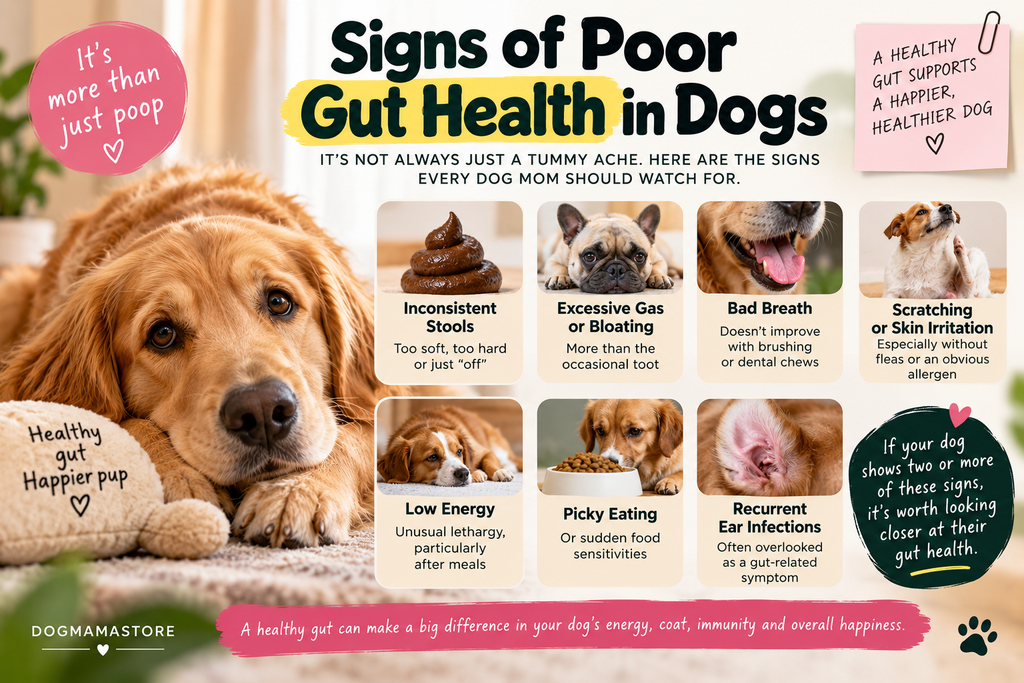
This is the part every dog mom should bookmark. The signs of poor gut health in dogs aren’t always obvious, and they don’t always look like a tummy ache. Here’s what to watch for:
- Inconsistent stools — alternating between too soft, too hard, or just “off” for days at a time
- Excessive gas or bloating — more than the occasional toot after dinner
- Bad breath that doesn’t improve with dental chews or brushing
- Frequent scratching or skin irritation, especially without fleas or an obvious allergen
- Low energy or unusual lethargy, particularly after meals
- Picky eating or sudden food sensitivities
- Recurrent ear infections, which are often overlooked as a gut-related symptom
If your dog is showing two or more of these signs of poor gut health in dogs, it’s worth paying closer attention to what’s going on inside, not just what’s going in their bowl.
It’s also worth noting that these symptoms can be sneaky. A dog who seems “fine” on the surface might still be dealing with an unbalanced microbiome that’s quietly affecting their immune response. That’s part of why recognizing the signs of poor gut health in dogs matters so much — catching it early usually means an easier fix.
What Throws This Balance Off in the First Place
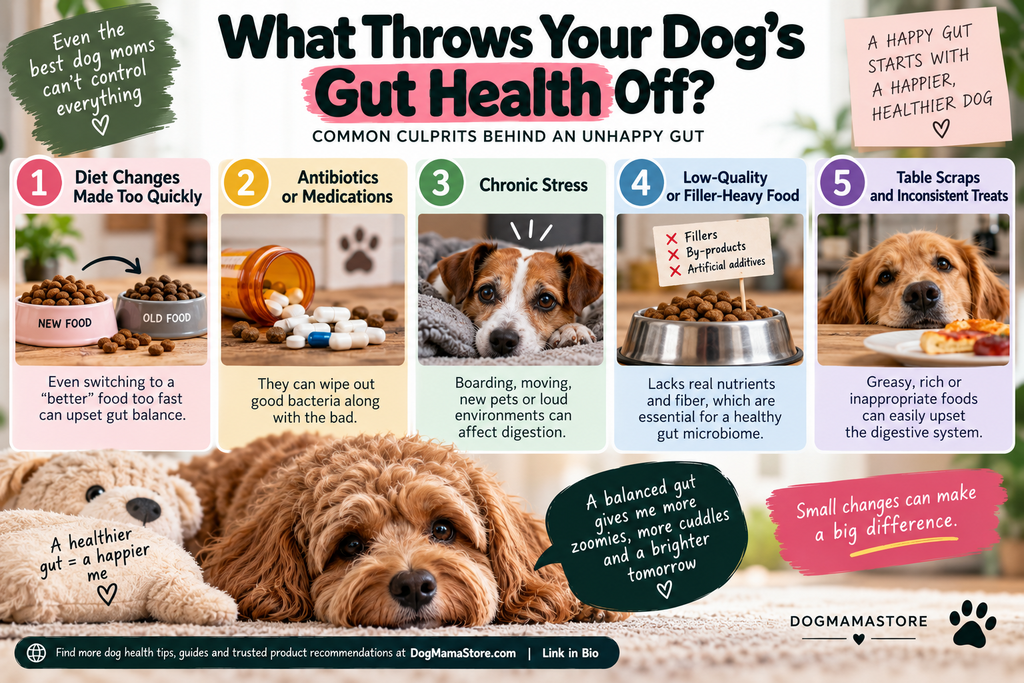
A few common culprits behind an unhappy digestive system:
- Diet changes made too quickly — even switching to a “better” food too fast can upset the balance
- Antibiotics or medications, which can wipe out good bacteria along with the bad
- Chronic stress, from things like boarding, moving, or a new pet in the house
- Low-quality or filler-heavy food, lacking fiber and real nutrients
- Table scraps and inconsistent treats, especially anything greasy or rich
None of these mean you’ve done something wrong as a dog parent. This balance is genuinely easy to throw off, even with the best intentions.
How to Support Dog Gut Health Day to Day
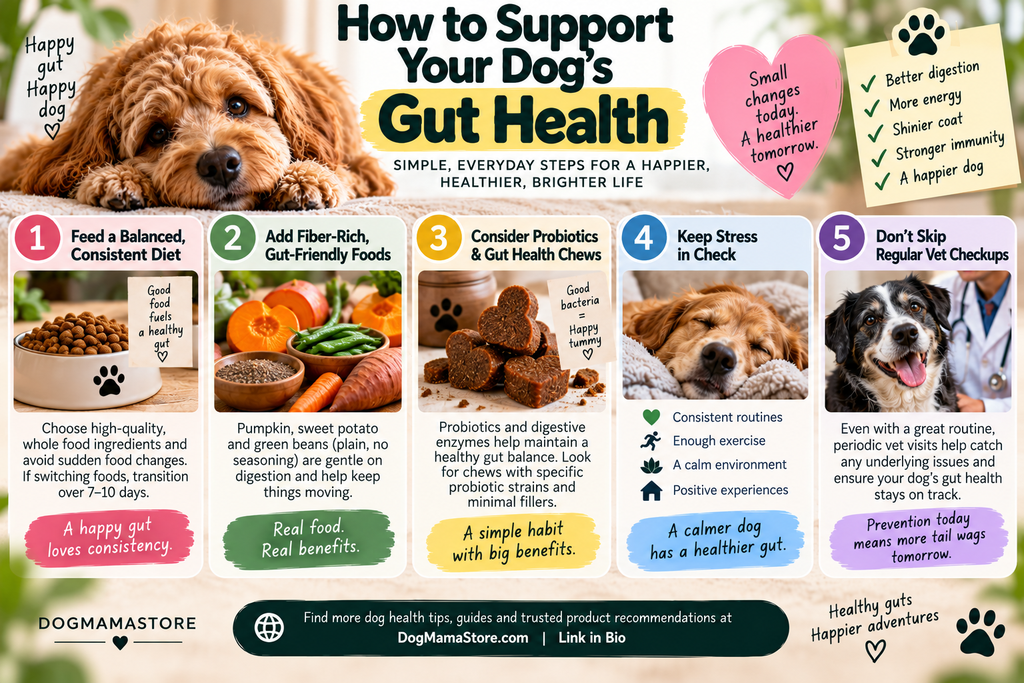
The good news: supporting dog gut health doesn’t require a complete lifestyle overhaul. A few consistent habits go a long way.
1. Prioritize a Balanced, Consistent Diet
Sudden food swaps are one of the fastest ways to upset digestion. If you’re changing food, transition over 7–10 days, mixing in a little more of the new food each day.
2. Add Fiber-Rich, Gut-Friendly Foods
Pumpkin, sweet potato, and green beans (plain, no seasoning) are gentle on digestion and genuinely help.
3. Consider Probiotics and Dog Gut Health Chews
This is where a lot of dog parents start seeing real results. Dog gut health chews are an easy, low-effort way to introduce probiotics and digestive enzymes without changing your dog’s whole diet. Look for dog gut health chews that list specific probiotic strains (not just “probiotics” as a vague ingredient) and avoid ones loaded with sugar or artificial fillers.
Most dogs take to dog gut health chews easily since they’re formulated to taste like a treat, which makes them one of the simplest additions to a daily routine. Keep a small stash on hand and it becomes a habit that barely takes any effort at all.
4. Keep Stress in Check
Gut health and stress are more connected than most people realize. Consistent routines, enough exercise, and a calm environment all support a healthier gut over time.
5. Don’t Skip Regular Vet Checkups
Even with a great routine, periodic vet visits help catch anything that at-home care can’t fix on its own.
The Gut-Skin-Immune Connection
Here’s something that surprises a lot of dog parents: a huge portion of your dog’s immune system actually lives in the digestive tract. That’s why an unhappy gut so often shows up as skin problems, allergies, or a dog who seems to catch every little bug going around. It’s all connected — which is also why fixing digestion can sometimes clear up issues you’d never think to link back to the stomach, like chronic itchiness or a coat that’s lost its shine.
This is part of why so many holistic vets look at digestion first, even when the presenting complaint is something like ear infections or skin flare-ups. The gut sets the tone for everything else.
A Quick Note on Puppies and Senior Dogs
Digestive balance matters at every life stage, but puppies and senior dogs tend to be more sensitive to disruptions. Puppies have developing microbiomes that are easily thrown off by diet changes or stress, while senior dogs often deal with slower digestion and a higher likelihood of underlying conditions that affect their gut. If you’ve got a puppy or a senior at home, it’s worth being extra mindful of food transitions, and checking in with your vet before adding any new supplements to their routine.
Frequently Asked Questions
How long does it take to fix a dog’s digestive imbalance? It varies, but most dogs show noticeable improvement within one to two weeks of consistent diet support and probiotics, assuming there isn’t an underlying medical issue driving the symptoms.
Can I just add plain yogurt instead of a supplement? Plain, unsweetened yogurt with live cultures can help in small amounts, but it’s not as targeted or potent as a purpose-made probiotic supplement, and some dogs are lactose sensitive.
Is it normal for stool quality to change with the seasons? Minor changes can happen with shifts in activity level or treats, but any significant or prolonged change is worth mentioning to your vet.
When to See a Vet
If you’re noticing the signs of poor gut health in dogs persisting for more than a few days — especially vomiting, blood in stool, or significant lethargy — skip the home remedies and call your vet. Dog gut health chews and dietary changes are great for ongoing support, but they’re not a substitute for veterinary care when something’s genuinely wrong.
The Bottom Line
Dog gut health isn’t something that needs to be complicated or expensive to manage. Learning to spot the signs of poor gut health in dogs early, making thoughtful diet choices, and adding something simple like dog gut health chews to your routine can make a real difference in how your dog looks, feels, and acts day to day.
Your dog can’t tell you when something feels off inside — but their gut usually will, one way or another. Paying attention now means fewer surprises (and fewer carpet cleanups) later.
I’ll use the AKC probiotics article as the external authority link. Here’s the paragraph:
If you’re not sure whether your pup’s symptoms point to a bigger issue, our dog poop color chart is a quick way to check what’s normal and what’s a red flag. Once you’ve ruled out anything urgent, our guide to natural probiotics for dogs walks through gentle, food-based ways to support digestion alongside any dog gut health chews you introduce. For more on how probiotics support overall canine wellness, the American Kennel Club has some great research-backed insight too. And if you want more everyday dog mom tips like this, come follow us on Instagram @dogmamastore for daily health hacks, relatable content, and a lot of good dog mom energy.
Disclaimer: This article is intended for general informational purposes only and is not a substitute for professional veterinary advice, diagnosis, or treatment. Every dog is different, and what works for one may not be right for another. Always consult your veterinarian before making changes to your dog’s diet, introducing new supplements like dog gut health chews, or if you notice any signs of poor gut health in dogs that concern you. If your dog is showing symptoms of illness or distress, please seek veterinary care promptly.